 Visit Arabia
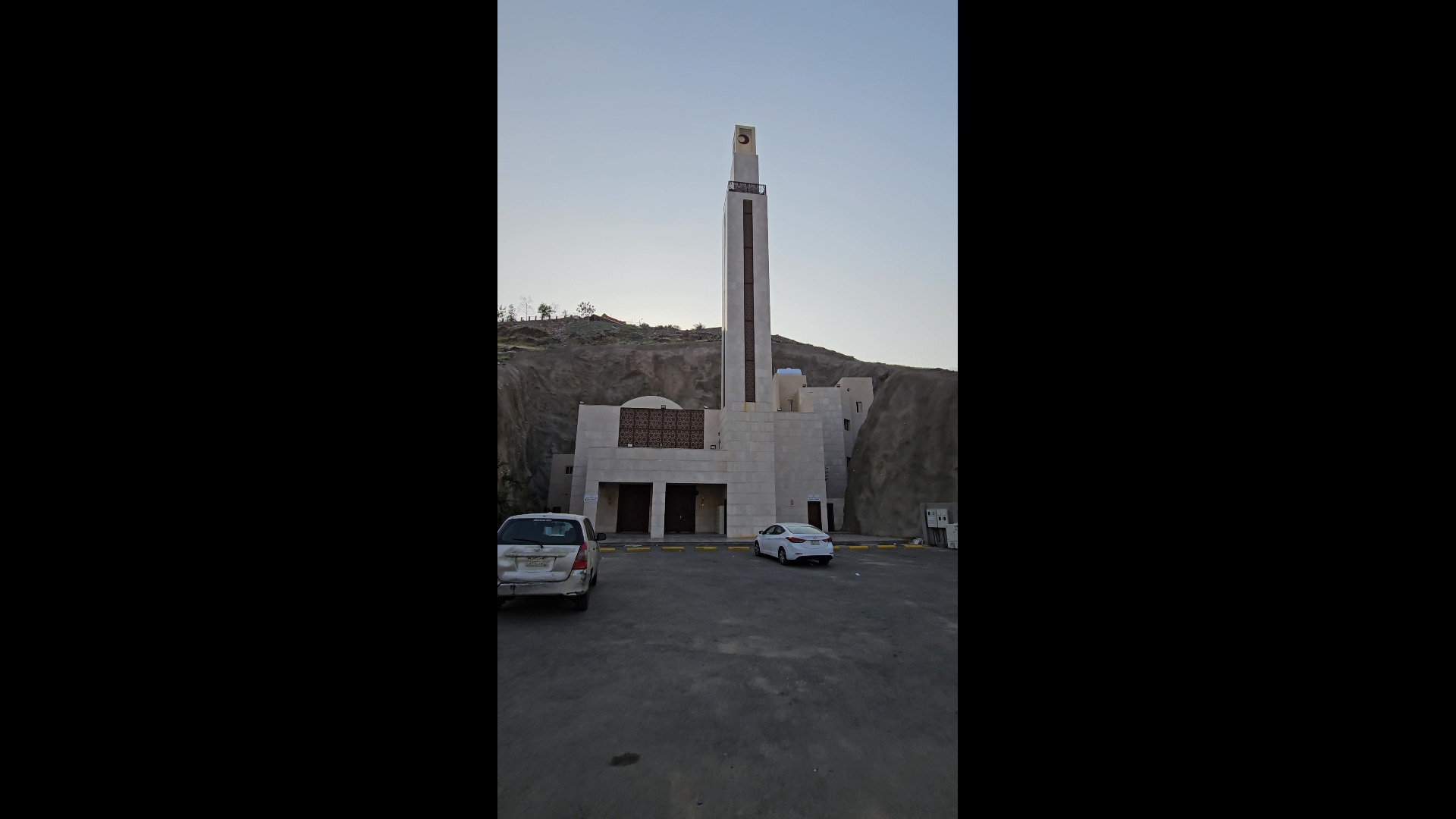
At At-Tan'im, at the edge of the Haram (about 15 km west of this mosque), where the Mosque of Aisha رضي الله عنها stands today, the sky saw the first companion crucified for Allah. His name: Khubayb ibn 'Adi al-Ansari رضي الله عنه.
The betrayed servant
Khubayb was an Ansari from Madinah, of the noble tribe of Aws. At the Battle of Badr (2 AH / 624 CE), he had fought for Allah and killed a Quraysh chief: Al-Harith ibn 'Amir ibn Nawfal.
Two years later, in the year 4 AH (625 CE), men from the tribes of 'Adal and al-Qara came to see the Prophet ﷺ saying:
"O Messenger of Allah, among us there are people who have converted. Send with us men who will teach us the religion, recite the Quran to us and instruct us in the laws of Islam."
The Prophet ﷺ, full of trust in this seemingly sincere request, sent ten companions from among the best, led by 'Asim ibn Thabit رضي الله عنه.
📚 Sahih al-Bukhari no. 4086 · Ibn Hisham · As-Sirah An-Nabawiyyah
The betrayal at Ar-Raji'
When the mission arrived at Ar-Raji' (a watering place between 'Usfan and Makkah), the supposed hosts revealed themselves to be traitors. They called their allies from Banu Lahyan — about 100 archers — who surrounded the ten companions.
'Asim ibn Thabit رضي الله عنه, seeing the trap, climbed a hill with his companions and refused to surrender:
"By Allah, I will not come down under the protection of a disbeliever!"
Seven companions fell as martyrs under a rain of arrows, including 'Asim. Allah then sent a swarm of bees to protect his body from mutilation; according to Ibn Hisham, a flood then carried his remains far from the enemy.
📚 Sahih al-Bukhari no. 4086 · Ibn Hisham
Three surviving companions — Khubayb ibn 'Adi, Zaid ibn ad-Dathinnah and a third — came down under a promise of protection. No sooner had they reached the bottom than the enemies tied them up. The third companion immediately understood the second betrayal and declared:
"This is the first of their betrayals. By Allah, I will not follow you — I have a fine example in my brothers."
He was killed on the spot. Khubayb and Zaid, for their part, were taken away and sold to the Quraysh like cattle in the markets of Makkah.
📚 Ibn Hisham · As-Sirah · Tabaqat Ibn Sa'd
The prisoner of the sons of Al-Harith
The sons of Al-Harith — those whose father had been killed at Badr by Khubayb — bought him in order to kill him in revenge. They imprisoned him in their house in Makkah, waiting for the end of the sacred months during which blood could not be shed.
During this captivity, a deeply moving event occurred. The daughter of Al-Harith, who was watching over him, later recounted:
"By Allah, I have never seen a better prisoner than Khubayb. I saw him one day eating a bunch of grapes held in his hand, while he was in chains, and there was no fruit at all in Makkah at that time. It could only have been a provision that Allah granted him."
📚 Sahih al-Bukhari no. 3045 · no. 4086
When they decided to execute him, Khubayb borrowed a razor from one of the daughters of Al-Harith to purify himself. A little boy of the household came up to him without her noticing; she found him sitting on Khubayb's thigh, the razor in his hand, and was seized with terror. Khubayb said to her:
"Do you fear that I will kill him? I would never do that, if Allah wills."
📚 Sahih al-Bukhari no. 3045 · no. 4086
The walk to At-Tan'im
The fateful day arrived. The Quraysh took Khubayb out of the Haram — for even they respected the sanctity of Makkah, where blood was not to be shed. They took him to At-Tan'im, at the border of the sacred sanctuary.
All of Makkah had come out: men, women, children, slaves. Some came for revenge, others for the spectacle, still others out of hatred for Islam. No one stayed in the city.
📚 Tabaqat Ibn Sa'd
They planted a long wooden stake in the ground — an improvised cross. In front of the frenzied crowd, Khubayb raised his eyes and said with an overwhelming calm:
"Allow me to pray two rak'ahs."
They accepted.
The two rak'ahs that changed Islam
Khubayb turned towards the Kaaba and prayed two rak'ahs — short, composed, perfect. When he stood up, he declared to the crowd these immortal words:
"By Allah, had I not feared that you would think I was prolonging my prayer out of fear of death, I would have made it longer."
📚 Sahih al-Bukhari no. 3045 · no. 4086
This simple gesture, performed beneath the cross, became a sunnah: from that day on, every Muslim condemned to death is invited to pray two rak'ahs before the execution. Khubayb founded this tradition.
The supplication of the martyr
When he was tied to the cross, Khubayb raised his hands to the sky, and before his executioners pronounced this supplication, whose complete form is reported in Sahih al-Bukhari (no. 3989), nos. 3045 and 4086 giving only its beginning ("O Allah, count them one by one"), and which Ibn Hisham reports with "and do not leave a single one of them" (ولا تغادر) instead of "and do not spare a single one of them" (ولا تبق):
« اللَّهُمَّ أَحْصِهِمْ عَدَدًا، وَاقْتُلْهُمْ بَدَدًا، وَلَا تُغَادِرْ مِنْهُمْ أَحَدًا »
Allâhumma ahsihim 'adadan, waqtulhum badadan, wa lâ tughâdir minhum ahadâ
"O Allah, count them one by one, kill them scattered, and do not leave a single one of them!"
📚 Sahih al-Bukhari no. 3989 · no. 4086 · Ibn Hisham · As-Sirah
According to Ibn Hisham, Mu'awiya ibn Abi Sufyan related that his father threw him to the ground that day, for fear of the supplication of Khubayb.
The last verses
Then, before being put to death, Khubayb recited verses of a heart-breaking beauty:
"If I am killed as a Muslim,
I care not on which side I fall for Allah.
All of this is for the cause of my Lord,
And if He wills, He will bless every torn limb."
📚 Sahih al-Bukhari no. 3045 · no. 4086 · Ibn Hisham
The final test — absolute loyalty
According to the Sirah of Ibn Hisham, this exchange took place at At-Tan'im with Zayd ibn ad-Dathinnah, Khubayb's companion in captivity, at the moment of his execution (some accounts attribute it to Khubayb). Abu Sufyan asked him:
"O Zayd, would you not prefer to be at home with your family, safe, and that Muhammad be in your place?"
Zayd replied:
"By Allah! I could not even bear that the Messenger of Allah ﷺ be pricked by a single thorn while I was safe in my house!"
Abu Sufyan, moved to the core, declared:
"I have never seen anyone love someone as much as the companions of Muhammad love him."
📚 Ibn Hisham · As-Sirah
Then 'Uqbah ibn al-Harith approached Khubayb and struck him the fatal blow. Khubayb ibn 'Adi al-Ansari رضي الله عنه, the beloved of Allah, the first crucified for this religion, gave up his soul to his Lord.
The salam across the sky
During his last moments, Khubayb had said:
"O Allah, convey my salam to the Messenger of Allah ﷺ!"
According to an account cited by Ibn Hajar, at that precise moment, in Madinah, the Prophet ﷺ was sitting with his companions. He suddenly raised his head and said:
"Wa 'alayka as-salam, O Khubayb."
Then he turned to the companions and announced to them: "Khubayb has just been killed."
📚 Fath al-Bari Sharh al-Bukhari (Ibn Hajar), commentary on hadith no. 3045
Allah, by His grace, had conveyed the salam of a crucified dying man to His Beloved ﷺ — over the deserts, over the valleys, beyond the mountains.
The return of the body
According to an account reported by Imam Ahmad (chain judged weak), the Prophet ﷺ later sent 'Amr ibn Umayyah ad-Damri alone to Makkah. At night, this companion untied the remains of Khubayb from the stake; they fell to the ground, and when he turned around, he found no trace of them, as if the earth had swallowed them.
📚 Musnad Ahmad no. 22477 (hadith of 'Amr ibn Umayyah)
Why visit this place
When you stand at At-Tan'im, brother, you stand where a man chose death rather than see a single thorn wound the foot of the Prophet ﷺ. You stand where:
A man was crucified for Allah — the first of this ummah
A man prayed two rak'ahs beneath the cross with the calm of an angel
A man founded a sunnah that has lasted for 14 centuries
A man sent his salam to the Prophet ﷺ from his cross, and Allah conveyed it
A man called upon Allah against his executioners
It is also here that Aisha bint Abi Bakr رضي الله عنها, years later, came in Ihram for her Umrah with her brother 'Abdul-Rahman — on the order of the Prophet ﷺ. The same ground that had seen the blood of Khubayb then saw the mother of the believers enter the state of sanctity.
📚 Sahih al-Bukhari no. 1556
Main sources
Sahih al-Bukhari no. 4086 (Kitab al-Maghazi — full account of Ar-Raji')
Sahih al-Bukhari no. 3045 (the 10 companions sent)
Sahih al-Bukhari no. 1556 (Aisha at At-Tan'im)
Musnad Ahmad no. 22477 (the return of the body, weak chain)
Fath al-Bari Sharh al-Bukhari (Ibn Hajar al-'Asqalani)
As-Sirah An-Nabawiyyah (Ibn Hisham)
Tabaqat al-Kubra (Ibn Sa'd)
Tarikh al-Tabari
Usd al-Ghaba (Ibn al-Athir al-Jazari)
May the peace of Allah be upon His Messenger Muhammad ﷺ, and may He be pleased with Khubayb ibn 'Adi al-Ansari, the first of His servants crucified for Him.
"Wa lâ tahsabanna alladhîna qutilû fî sabîlillahi amwâtâ — bal ahyâ'un 'inda Rabbihim yurzaqûn."
"And never think of those who have been killed in the cause of Allah as dead. Rather, they are alive with their Lord, receiving provision." (Quran 3:169)