 Visit Arabia
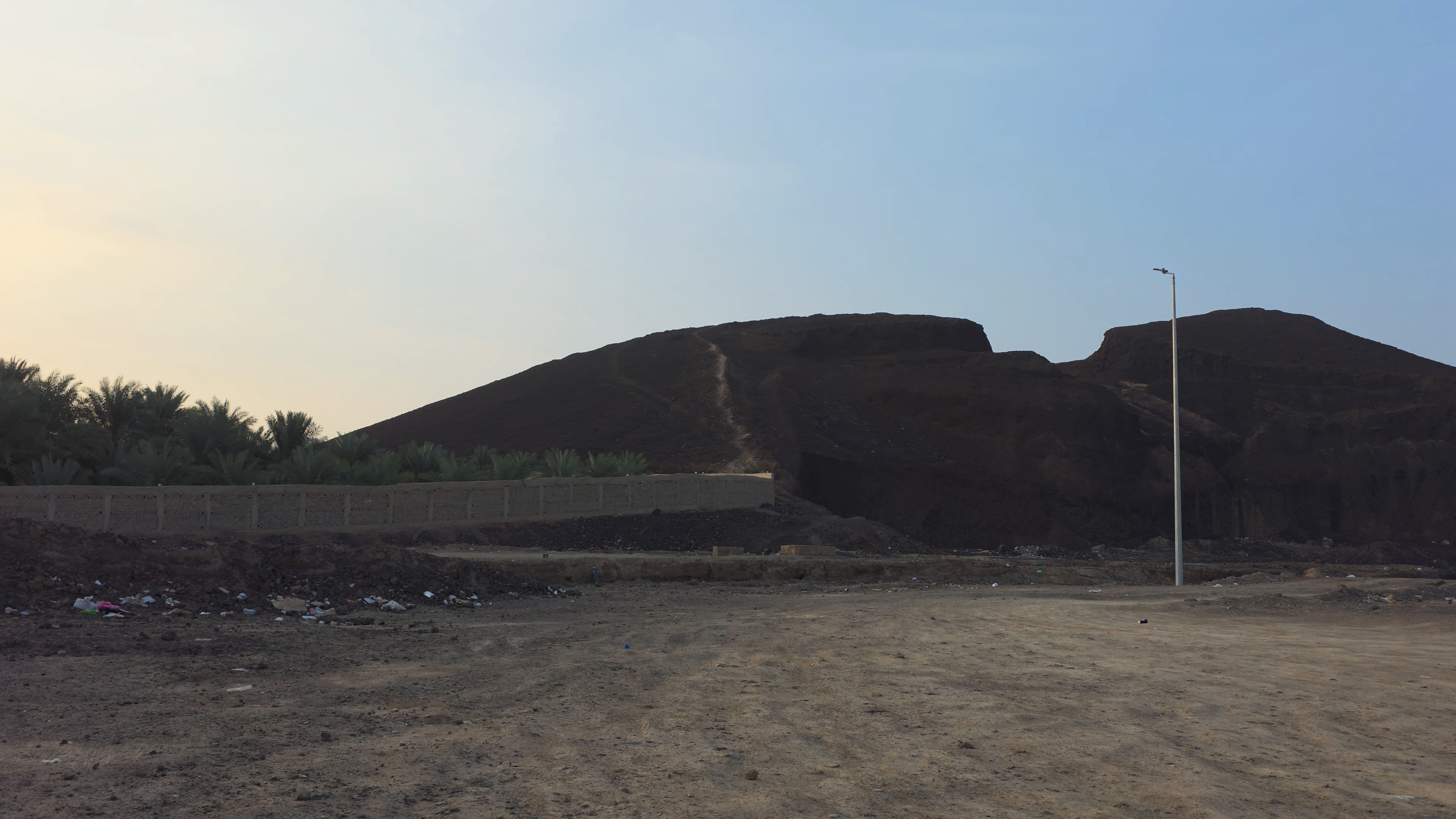
JABAL BANI QURAYZA
The mountain of final judgment.
The siege that followed the Khandaq
After the siege of Khandaq (5 AH), during which the Banu Qurayza — a Jewish tribe of Medina allied by treaty to the Muslims — betrayed their pact by conspiring with the enemy coalition, the Prophet ﷺ declared that this issue needed to be resolved immediately.
The archangel Jibreel came and said: "You have laid down your arms? By Allah, we have not laid them down. Go out to them." The Prophet ﷺ asked: "Where?" He pointed to the Banu Qurayza. (Sahih al-Bukhari no. 4117 · Sahih Muslim no. 1769)
The siege
The Banu Qurayza locked themselves in their fortresses, located at the foot of Jabal Bani Qurayza, to the southeast of Medina. The siege lasted 25 days.
In the end, they agreed to surrender according to the judgment of Sa'd ibn Mu'adh (رضي الله عنه) — leader of the Aws, their former allies.
The judgment
Sa'd, already mortally wounded by his arrow during the Khandaq, pronounced the verdict (some authors compare it to the Torah, Deuteronomy 20:12-14):
- The fighting men executed
- The women and children taken captive
- The property divided
A contested but legal justice
This judgment, harsh, is often misunderstood. It must be contextualized:
1. According to some authors, their own Law (Torah) prescribed a comparable sanction
2. They had betrayed a solemn pact at a time when Medina was at risk of annihilation
3. Betrayal in total war was punishable by death in the entire ancient world
The women and children were spared: they were taken captive, in accordance with the verdict, and not executed.
Today
Jabal Bani Qurayza still exists, in the southern area of Medina. It is a site for historical reflection on prophetic justice, in all its complexity.
To contemplate: the gravity of the betrayal of a solemn pact.