 Visit Arabia
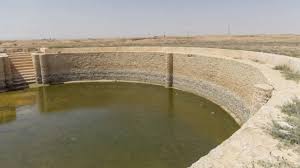
The Zubaydah Canal (`Ayn Zubaydah`) is a huge system of aqueducts built in the 9th century CE by Zubaydah bint Ja'far, the wife of the Abbasid caliph Harun ar-Rashid.
It is one of the greatest works of Islamic engineering: a canal that carries water from the source mountains, about thirty kilometres east of Makkah, to the plains of Arafat and Muzdalifah, and then to Makkah itself.
During her Hajj in the year 186 AH (802 CE), Zubaydah noticed that the pilgrims suffered terribly from thirst in the arid plains of Arafat and Mina. She decided to fund a lasting work. According to the chroniclers, she is said to have spent 1,700,000 gold dinars to build this system.
Tabari · Tarikh · Ibn Khaldun
According to the chroniclers, when her steward warned her of the considerable cost of the works, she ordered him to continue them.
The system included underground canals (qanats) over about thirty kilometres, above-ground aqueducts, ventilation shafts every 50-100 m, reservoirs, public fountains at Mina, Arafat, Muzdalifah and Makkah, and distribution channels for baths and ablutions.
For more than a millennium, until the 20th century, this system supplied water to the Hajj pilgrims, the permanent inhabitants of Makkah, the animals of the caravans, the mosques and the sacred places.
Zubaydah perfectly embodies the hadith of the Prophet ﷺ:
> "When a man dies, his deeds come to an end, except three: a continuing charity (sadaqah jariyah), beneficial knowledge, or a righteous child who supplicates for him."
Sahih Muslim no. 1631
For more than eleven centuries, generations of pilgrims drank the water of her canal: it is a sadaqah jariyah in the fullest sense of the term.